
We don’t all
learn the same way
Our method isn’t just one method: it borrows from several, and adjusts to the child in front of us.
Four steps, repeated for every new idea
Every new idea goes through these four steps, in this order.
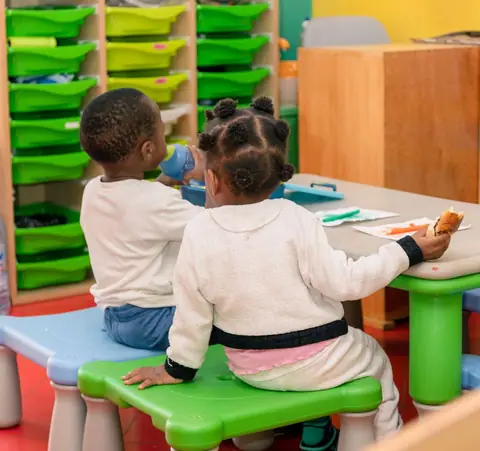
We start by watching: what the child touches, what they go back to, what they avoid. Nothing is decided until we understand how they learn.
Twelve areas, from movement to reading
All are worked on from pre-school, and prepared for from the nursery.
Obstacle courses, balance, coordination.
Naming, telling, sharing.
Touching, listening, comparing.
Recognising sounds and letters.
Sorting, arranging, counting, reasoning.
Drawing, painting, modelling, pottery.
Pottery, music, dance, drama.
Every day, from the micro-nursery onwards.
Sowing, watering, harvesting, sorting.
Serving yourself, tidying up, waiting your turn.
The vegetable garden, from sowing to harvest.
The henhouse, and the living things we observe.
No one-size-fits-all: an approach that adapts to the child, not the other way round.
Four fixtures that come round, whatever happens
English, every day
Routines, nursery rhymes and instructions in English, from the first day at nursery to the end of primary school.
Arts activities
Pottery, music, dance, singing, painting, drama, with real instruments, for every child.
Animal care time
Feeding the hens and rabbits, collecting eggs, observing: you understand living things by spending time with them.
The library and storytelling
Every classroom has its reading corner, where the story of the day is heard sitting on the floor.
Ten different ways to learn
They are not an add-on: each one serves an area of the curriculum, and every child takes part.
Know how your child is doing, without having to ask
A progress book
A progress book for every child, kept by the teacher, recording what has been mastered and what still needs more time.
Open, ongoing communication
With a few words about the day at every pick-up. For everything else, phone and WhatsApp always get a quick reply.
Individual support
A speech therapist, psychomotor therapist or psychologist steps in when a need is identified, in agreement with the family.
The class heads out into Yaoundé
Museum, zoo, park: every outing builds on what is being covered in class, and is prepared before setting off.

Come and meet us!
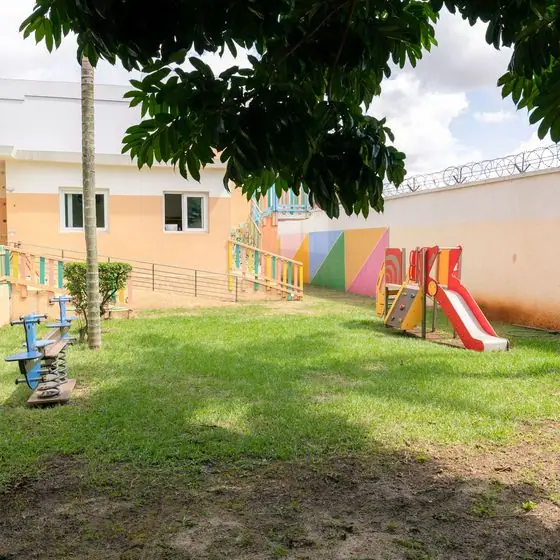
A visit says more than any words: you’ll see the premises, the materials and how the children thrive at the school.